
UAE eInvoicing: what changes, when, and what to check now
Mandatory electronic invoicing arrives in phases from 2027. It is a data and systems project as much as a compliance one.
- Author
- Orivion editorial
- Published
- Last reviewed
- Reading time
- 6 min
Written from Orivion's delivery practice.
Why this matters
The UAE is introducing mandatory electronic invoicing in phases: businesses with revenue of AED 50 million or more from 1 January 2027, and businesses below that threshold from 1 July 2027, subject to the Ministry of Finance's rollout requirements.
For most businesses, the work is not writing a new invoice template. It is making sure the right data exists in the right systems and can reach an Accredited Service Provider in the required structure.
The timeline
A voluntary pilot opened on 1 July 2026 for businesses of any size.
Businesses with annual revenue of AED 50 million or more: appoint an Accredited Service Provider by 30 October 2026 (extended from 31 July 2026), and implement from 1 January 2027.
Businesses with annual revenue below AED 50 million: appoint an Accredited Service Provider by 31 March 2027, and implement from 1 July 2027.
Government entities: appoint an Accredited Service Provider by 31 March 2027, and implement from 1 October 2027.
Dates and requirements come from Ministry of Finance decisions and can be amended, so check the official sources before planning.
Why it is a systems project
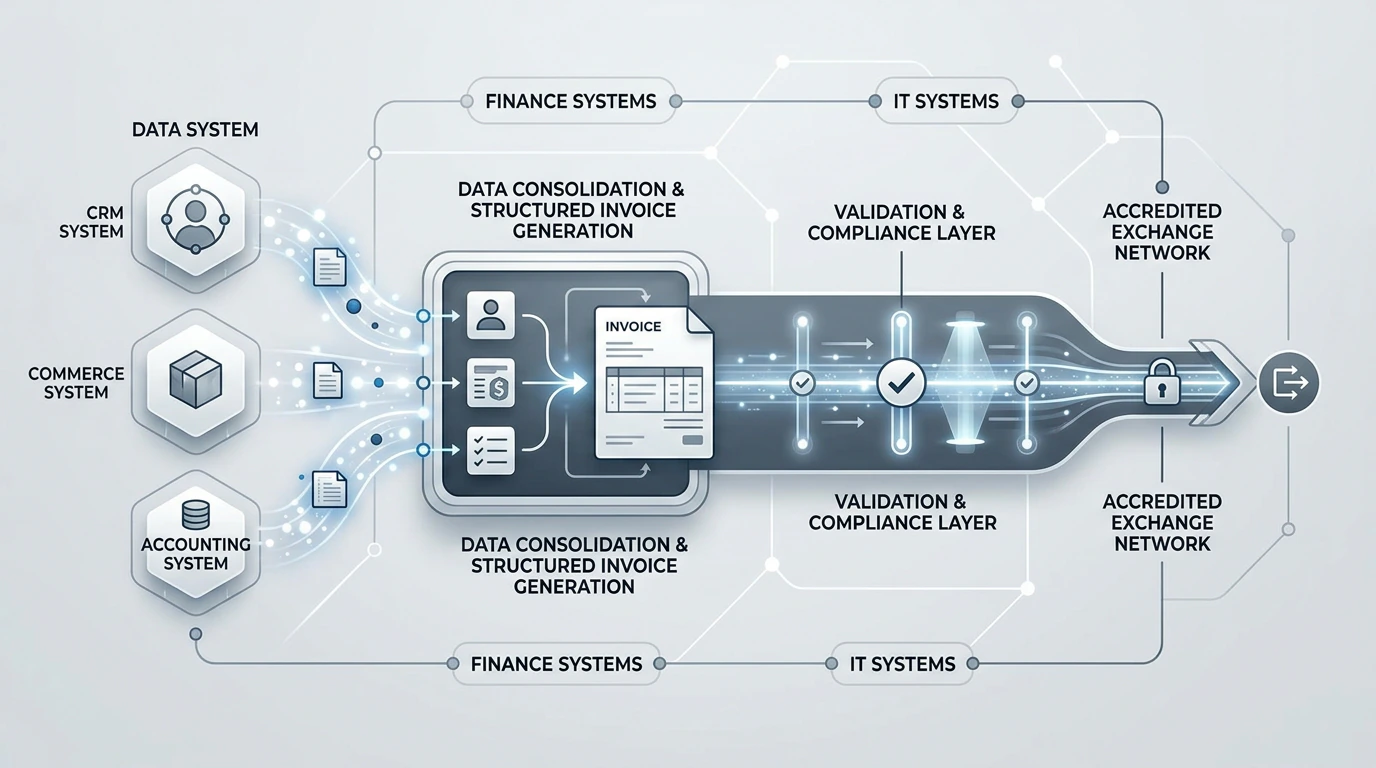
Electronic invoices are structured data exchanged through accredited providers, not PDFs sent by email. Customer tax details, product and service descriptions, amounts and references must be complete and consistent at the point the invoice is created.
That data often originates elsewhere: in the CRM, the ecommerce platform, the ERP or a billing system. Gaps upstream become compliance problems downstream.
Where businesses usually find gaps
Customer master data without complete tax identifiers. Invoices raised from several systems with different formats. Manual invoices created outside the accounting platform. Integrations that pass totals but not line-level detail.
An eInvoicing readiness check
- Confirm which phase applies based on annual revenue.
- List every system that creates invoices or credit notes.
- Check customer master data for complete, validated tax details.
- Confirm whether your accounting or ERP platform supports the required structure and provider integration.
- Shortlist Accredited Service Providers and understand their integration options.
- Map data flows from CRM, commerce and billing into invoicing.
- Plan testing, including the voluntary pilot where useful.
- Agree ownership between finance, tax advisers and IT.
What to do next
Start with an inventory of invoice-producing systems and a sample of real invoices. Most readiness gaps are visible within a day of looking.
Information on this site is general. It is not legal, tax or financial advice. Requirements change, so confirm current rules with the relevant authority or a licensed adviser.
Related Orivion services
Where Orivion can help.
- Software Engineering & CloudCustom applications, APIs, integrations, cloud and DevOps designed around your operation.
- Commerce & Digital OperationsStorefront, catalogue, checkout, orders, inventory and fulfilment working as one system.
- Data & Business IntelligenceData pipelines, trusted metrics, dashboards and analytics the whole business can rely on.
Related articles
Keep reading.
- UAE Market Entry7 min readHow to set up a company in Dubai: the steps, in the order they happenEach step depends on the one before it. Settle the activity and the jurisdiction first, and the licence, visas, bank account and tax registrations follow in sequence.Read
- UAE Market Entry6 min readUAE corporate tax for new companies: rates, registration and deadlinesEvery resident company registers, including free zone companies and those with no tax to pay. The main risks for a new company are deadlines and reliefs, not the rate.Read
- Data5 min readBefore the dashboard: can the business trust its numbers?Dashboards fail when definitions and data quality are left for later. Start underneath.Read
Want to talk through how this applies to your business?